


Product Introduction
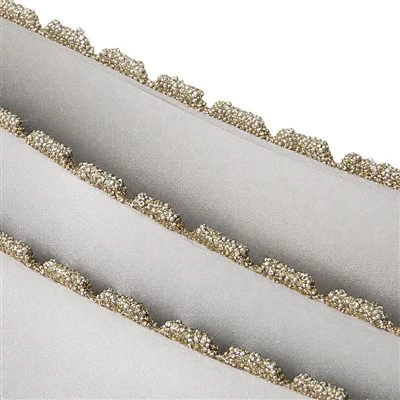
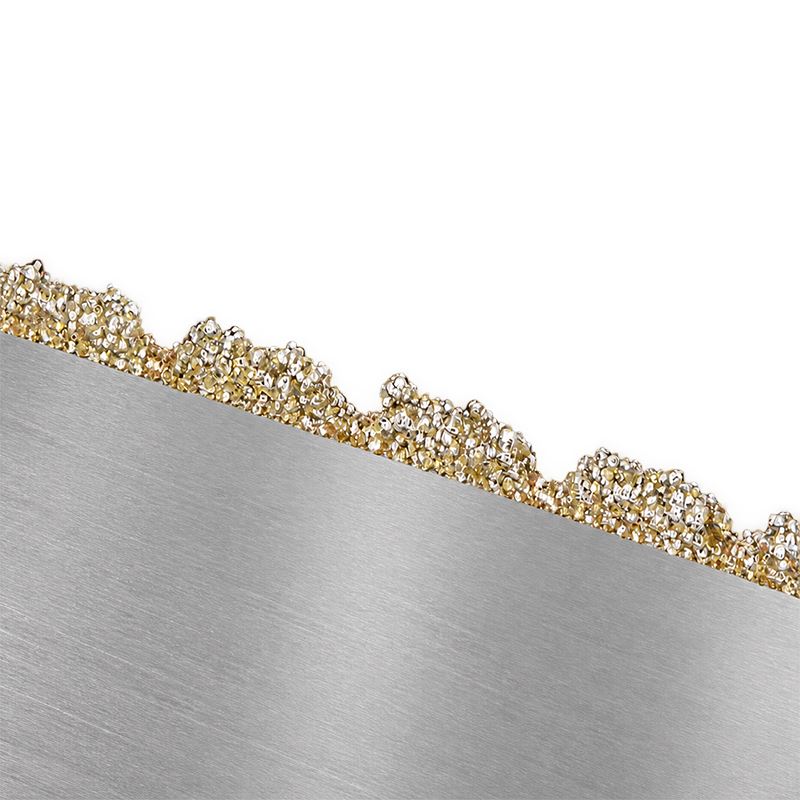
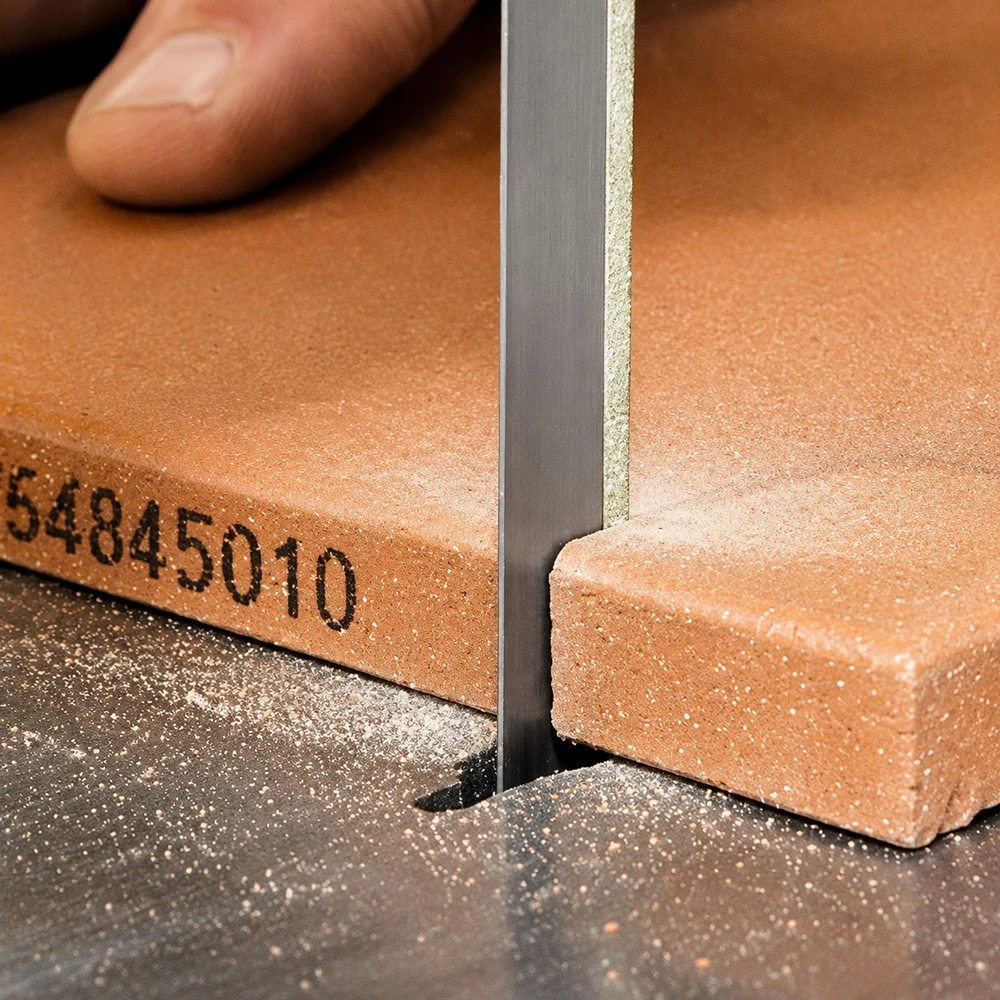
Electroplated diamond edge on a high-tensile steel band, supplied as welded loops to your machine length. The blade removes material by grinding, not toothed cutting, which keeps chipping low on rough gemstone, jade, agate and other brittle stock where a standard tooth blade will not track.
Width range 10–40 mm for gemstone and lapidary work; wider bands up to 80 mm available for stone and graphite.
Steel body 0.50 / 0.56 / 0.64 mm depending on pulley diameter and cut radius.
Diamond grit 35/40 and 50/60; finer grit on request.
Continuous edge as standard for straight slab and trim cuts; segmented edge available for thicker hard stock and improved coolant transport.
Specification
| Parameter | Value |
|---|---|
| Use | Gemstone, jade, agate, quartz, glass, ceramic, sapphire, silicon carbide, graphite |
| Edge type | Continuous (standard); segmented / wavy on request |
| Body material | High-tensile spring steel; stainless steel option for wet or corrosive coolant |
| Width | 10–40 mm (gemstone); up to 80 mm (stone, graphite) |
| Body thickness | 0.50 mm / 0.56 mm / 0.64 mm |
| Diamond grit | 35/40, 50/60; finer mesh on request |
| Bond | Electroplated nickel |
| Joint | Butt weld, dressed to diamond coating thickness |
| Supply form | Welded loop to customer length; open coil available |
| MOQ | 5 blades |
Joint and coating
The diamond is held in a nickel matrix deposited by electroplating. The steel ends are welded before the joint area is built back up to the coating thickness, so the weld does not sit below the diamond layer and catch on the guide or the work. Each loop is checked for joint alignment and thickness step before packing. The weld is a wear point like any band blade; it is not dressed as a cutting edge.
A thinner body keeps kerf low. On gemstone rough where a single slab may carry most of the material value, 0.50 mm body thickness reduces the stone converted to slurry per cut. The trade-off is lower beam strength; on small pulley diameters the thicker 0.64 mm body tracks more stably, and the width and thickness should be matched to the pulley rather than chosen for kerf alone.
Operating parameters
Coolant. Wet cutting is required. Water alone does not provide enough cooling and lubrication on most lapidary band saws; use a dedicated lapidary coolant or a water-based coolant additive. Dry running shortens diamond retention and raises chipping on heat-sensitive gemstone.
Break-in. Run the first cut at roughly 50% of the normal feed rate, the second at 70%, then return to the normal rate. This exposes fresh diamond without pulling grit out of the nickel bond on a new edge.
Band speed. Electroplated diamond band saws typically run in the 1,800–2,200 sfpm range. Confirm the final speed against your machine's pulley diameter, band thickness and the manufacturer's limit - a band that is too thick for the pulley will fatigue at the weld.
Feed. Keep feed constant and let the diamond grind. Pushing a continuous-edge blade into jade or agate loads the bond and produces chipping rather than a faster cut.
Application fit
Continuous edge is the default for slab, trim and straight sectioning on gemstone, agate, jade, opal rough and quartz. It leaves a narrower, more uniform kerf than a segmented edge and produces fewer edge chips on thin or fragile pieces. Segmented edge is used where the cut is deeper, the stock is thicker, or coolant flow and swarf clearance through the cut matter more than surface finish - for example graphite block, silicon carbide shapes and thicker stone sections. For contour cuts in jade and agate, a narrower band width and a wavy or serrated profile changes the contact pressure at the edge; the minimum cut radius should be checked against the band height before ordering.
Wholesale terms
Blades are made to the loop length you specify, not only to stock sizes. Send the machine model, pulley diameter and required overall length; loops are welded and packed in the ordered length. Standard widths and grits ship from stock within 48 hours. Welded-to-length loops and non-standard grit or width combinations take 7–14 working days. Each loop is coated with anti-rust oil, wrapped in VCI film and packed in a reinforced export carton or plywood case for sea freight. Private-label printing on the band and custom packaging are available on bulk orders.
FAQ
Which edge should I order for gemstone slab cutting - continuous or segmented?
Continuous for slab, trim and straight cuts in agate, jade, opal rough and quartz; it produces a narrower kerf and less edge chipping. Segmented where the cut is deeper, the material is thicker, or coolant and swarf need to clear through the cut. For contour work, band width and edge profile matter more than the continuous/segmented choice.
Can the blade run with water only?
Water alone is not sufficient on most lapidary band saws. Use a lapidary coolant or a water-based additive. Water-only cooling raises edge temperature, loosens diamond retention and increases chipping on heat-sensitive rough. If your machine is set up for flood coolant, confirm the concentration with the coolant supplier before the first production run.
How is the loop length matched to my machine?
Order by overall loop length, not by the old blade's label. Send the machine make and model, pulley diameter and the required weld-to-weld length. Pulley diameter also sets the maximum body thickness that will run without fatigue at the weld - a 0.64 mm body on an undersized pulley will fail at the joint before the diamond is spent.
What is the minimum order and can I test before bulk?
MOQ is 5 blades. Sample loops in a standard width and grit can be supplied for a trial cut on your material before a production order. Non-standard grit, width or loop length is made to order.
Is the weld covered if it fails before the diamond wears out?
Each weld is inspected for alignment and thickness step before packing. Weld performance depends on pulley condition, tension and how the band is tracked; if a weld fails while the diamond edge is still serviceable, send the loop back with the cut conditions and machine details for review. We do not replace welds that have been run dry, overloaded or tracked on a worn pulley.
Hot Tags: gemstone cutting bandsaw blade, China gemstone cutting bandsaw blade manufacturers, suppliers, factory, Diamond Band Saw Blade for Stone, diamond bandsaw blade for concrete, diamond bandsaw blade for glass, diamond bandsaw blade for granite, segmented diamond bandsaw blade, thin cut diamond bandsaw blade