


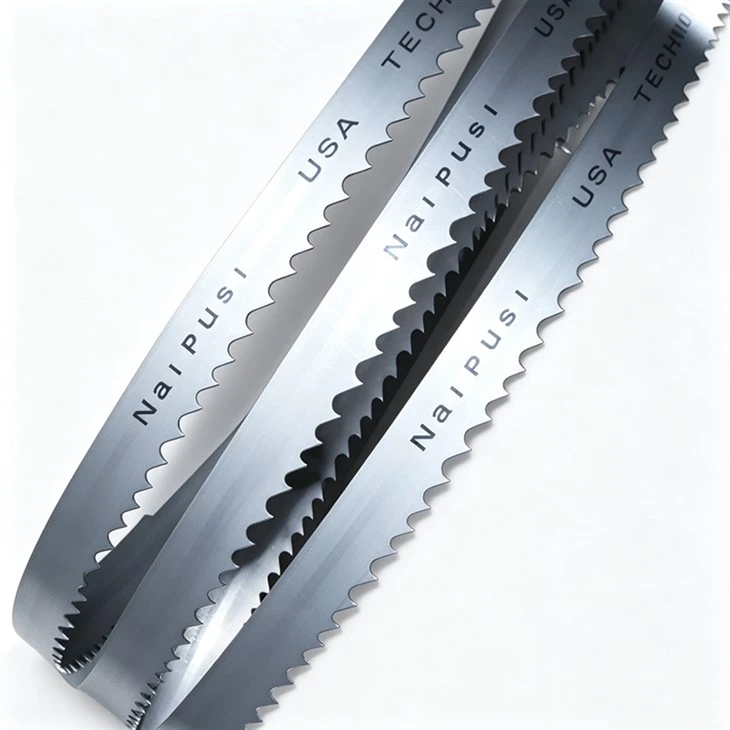


Hardwood Cutting Bandsaw Blade - Industrial Woodcutting Series
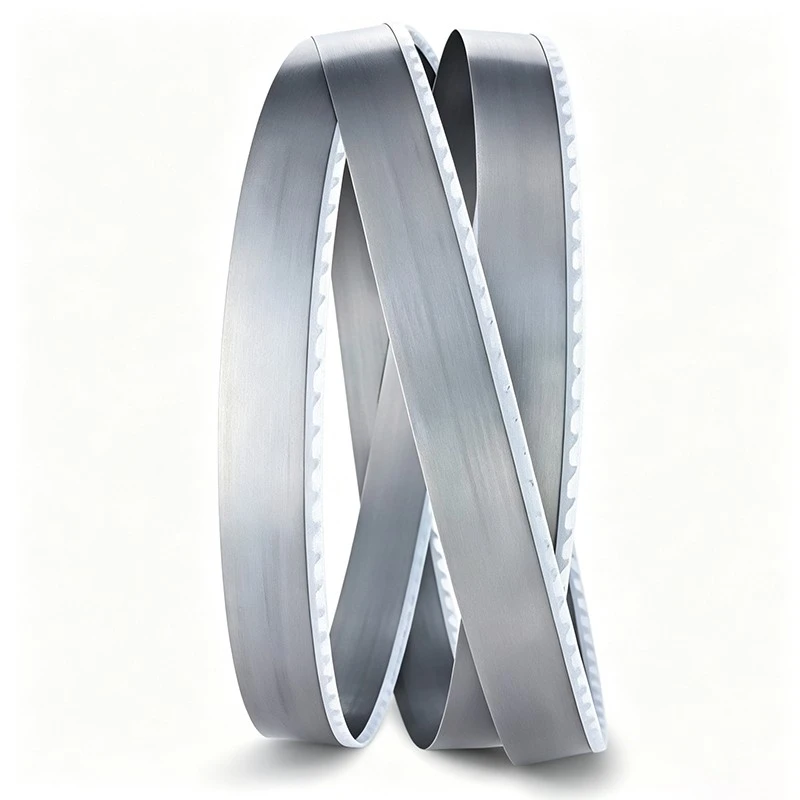
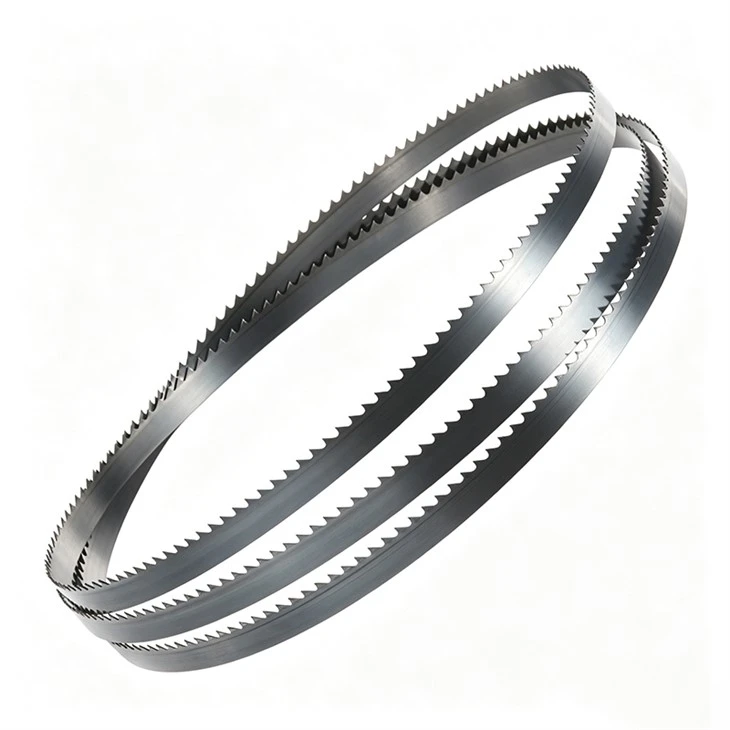
Sipu manufactures the Hardwood Cutting Bandsaw Blade specifically for primary and secondary processing of high-density hardwoods such as oak, maple, walnut, and exotic timber species. Processing dense wood stock generates intense friction and localized thermal stress. Our blades are engineered to maintain edge retention and straight-line tracking under the demanding resistance characteristics of hardwood fibers.

Technical Specifications
| Parameter | Industrial Standard | Dimensional Tolerance |
| Alloy Material | High-Carbon Spring Steel (Hardwood Spec) | N/A |
| Tooth Tip Hardness | 60 - 62 HRC | $\pm1\text{ HRC}$ |
| Body Flexibility | 42 - 45 HRC | $\pm2\text{ HRC}$ |
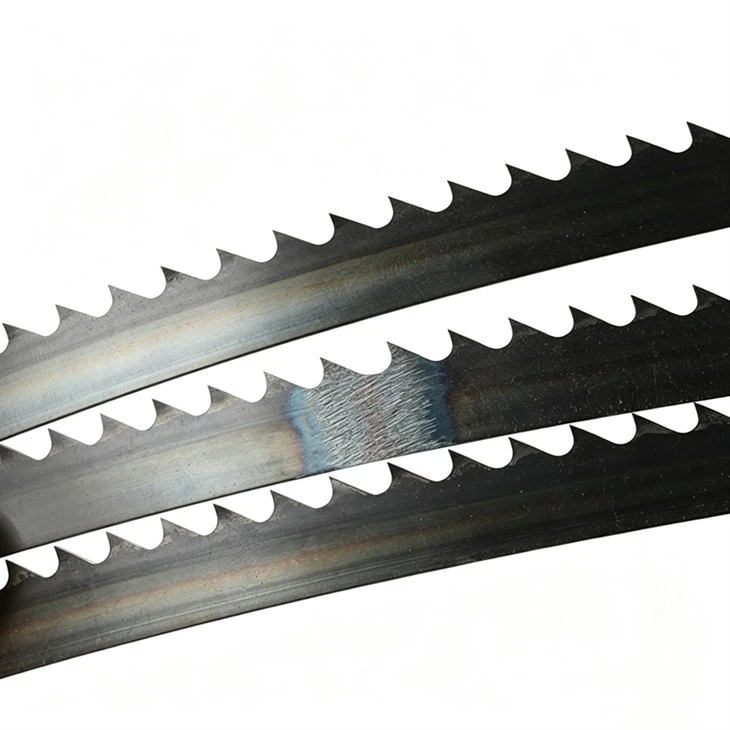
| Pitch & Profile | Specialized Hardwood Tooth Form | $\pm0.02\text{ mm}$ |
Metallurgical Performance & Thermal Resistance
Industrial mills cutting dense wood require tooling that resists abrasive wear and pitch buildup. We build our hardwood cutting lines around specific metallurgical dynamics:
Abrasion-Resistant Alloy Composition: We utilize a high-carbon spring steel enriched with balanced manganese and silicon ratios. This specific alloy chemistry increases surface abrasion resistance against abrasive hardwood grain, extending active cutting time between sharpenings by up to 30% compared to standard soft-wood blades.
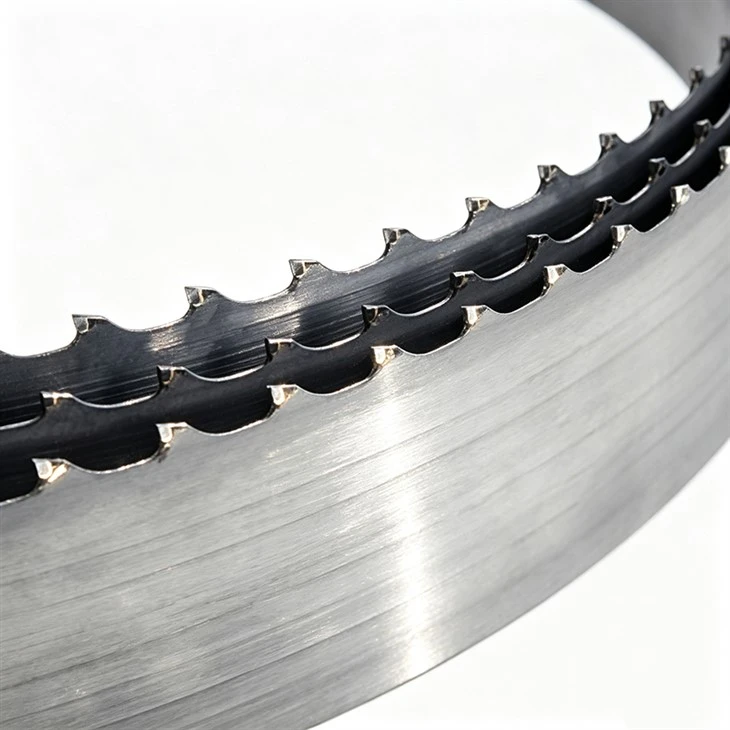
Alternate Tooth Set Configuration (Raker Pattern): Our milling machinery applies a precise alternate tooth set with optimized clearance angles. This geometry prevents the blade body from pinching in dense, closing kerfs caused by internal log stresses, reducing friction-induced heat generation.
Selective Tooth Hardness: We apply high-frequency induction hardening exclusively to the tooth points, achieving 60-62 HRC while maintaining a resilient, shock-absorbing body at 42-45 HRC. This differential hardness prevents tooth shearing when encountering sudden knots or regional density variations in hardwood logs.
Factory Manufacturing Standards & Quality Assurance
Sipu operates a dedicated 5,000-square-meter production plant tailored for precision saw tooling:
Computerized Tension Leveling: Every master strip undergoes automated roller-leveling to eliminate internal stresses, ensuring the blade remains completely flat during high-speed hardwood processing.
Optical Tooth Inspection: Inline optical scanning systems verify tooth symmetry and set angles continuously, preventing tracking deviation on commercial bandmills.
Moisture-Resistant Packaging: Finished blades are treated with a corrosion-inhibiting protective film and sealed in heavy-duty packaging to safeguard the sharp cutting edges during overseas transit and storage.
Sipu sawing products are sold both domestically and internationally


FAQ
Q: How does cutting dense hardwood affect blade maintenance cycles compared to softwoods?
A: Hardwoods contain higher concentrations of abrasive silica and dense cellular structures, which accelerate edge wear. Our specialized high-carbon alloy and induction-hardened tips are specifically designed to resist this abrasion, extending operational cycles before requiring re-sharpening.
Q: What tooth pitch is best suited for kiln-dried hardwood boards versus green hardwood logs?
A: For dry hardwood lumber (ripping or cross-cutting), a finer pitch (e.g., 3 to 4 TPI) provides a cleaner finish. For green hardwood logs with high moisture content, a slightly coarser pitch with deeper gullets is recommended to manage chip evacuation effectively.
Q: How do you prevent resin and sap accumulation from affecting cutting performance?
A: Our blades feature precision-polished gullets that minimize surface friction and prevent wood sap from adhering to the blade basin during continuous multi-shift operations.
Q: Can these blades be repeatedly re-sharpened using standard commercial grinding equipment?
A: Yes. The uniform metallurgical depth of our induction-hardened teeth allows for multiple re-sharpening cycles using standard CBN or aluminum oxide grinding wheels without losing tooth profile integrity.
Hot Tags: hardwood cutting bandsaw blade, China hardwood cutting bandsaw blade manufacturers, suppliers, factory, bandsaw blade for composite wood, bandsaw blade for laminated wood, bandsaw blade for panel cutting, Carbide Tipped Bandsaw Blades for Wood, narrow wood bandsaw blade, skip tooth wood bandsaw blade


